Prime Teen Accounts
I designed a new off-ramp for teens aging out of Prime Household, so turning 18 feels like a milestone instead of a cutoff.
- 0 to 1
- Research
- Multi-user
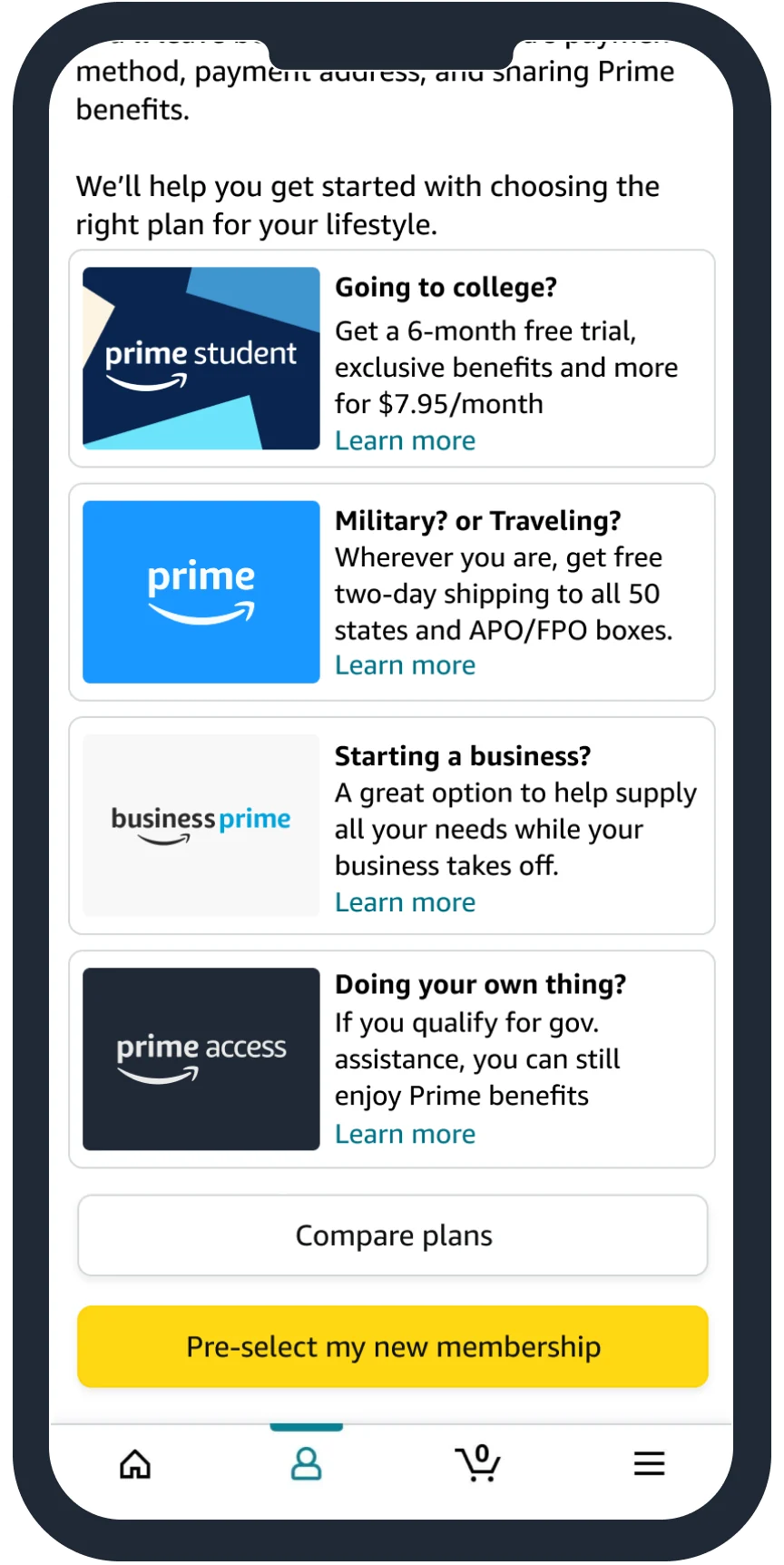
When teens turned 18, they got one email asking them to leave the household, or they'd be removed automatically in 45 days. It left teens and parents confused and frustrated.
I reframed the transition as a milestone. Teens and parents heard about it earlier and more clearly, and teens could choose their own Prime plan or a regular Amazon account.
On the back burner
Teen profiles were part of Prime Worldwide's Household initiative, and the experience for teens aging out had been on the back burner for too long. With Amazon Profiles around the corner, it needed a real off-ramp.
I led the end-to-end UX with a Senior PM, UX researcher, Senior engineer and UX writer, and worked with the Profiles team's designer so this would fit their upcoming work.
Increase membership conversion and satisfaction, and reduce account cancellations and customer service calls.
Let's dive deep
With a UX researcher on the Prime team, I ran two sets of interviews, one with teens and one with parents. Because of legal restrictions, we talked to people aged 18 to 22 who had already aged out of a Prime household.
The experience was abrupt. Teens felt left out, and parents had no visibility or options. Both groups asked for clearer guidance and more control.
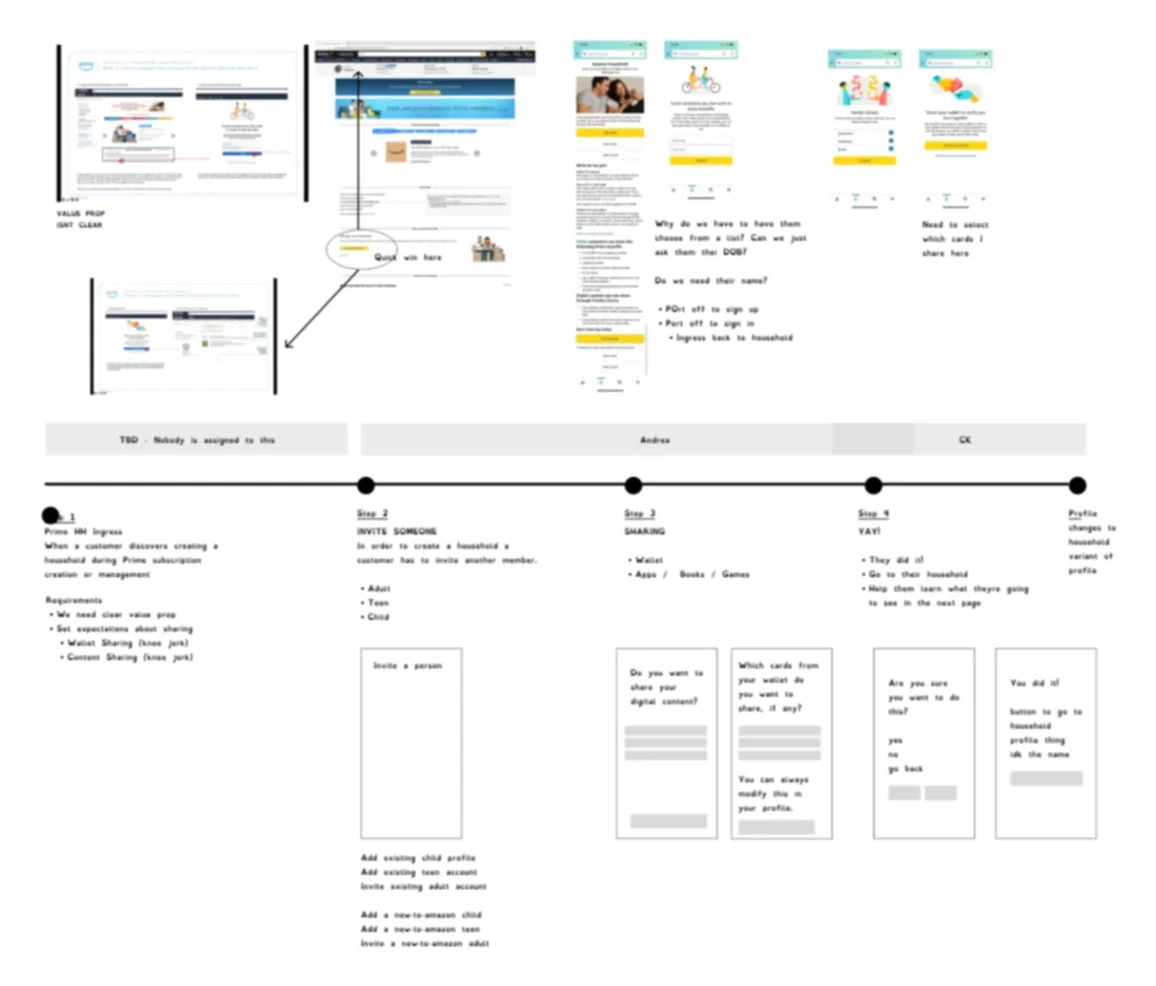
Focusing on the positive
If we frame this as a milestone rather than an ending, we can significantly improve how it's received.
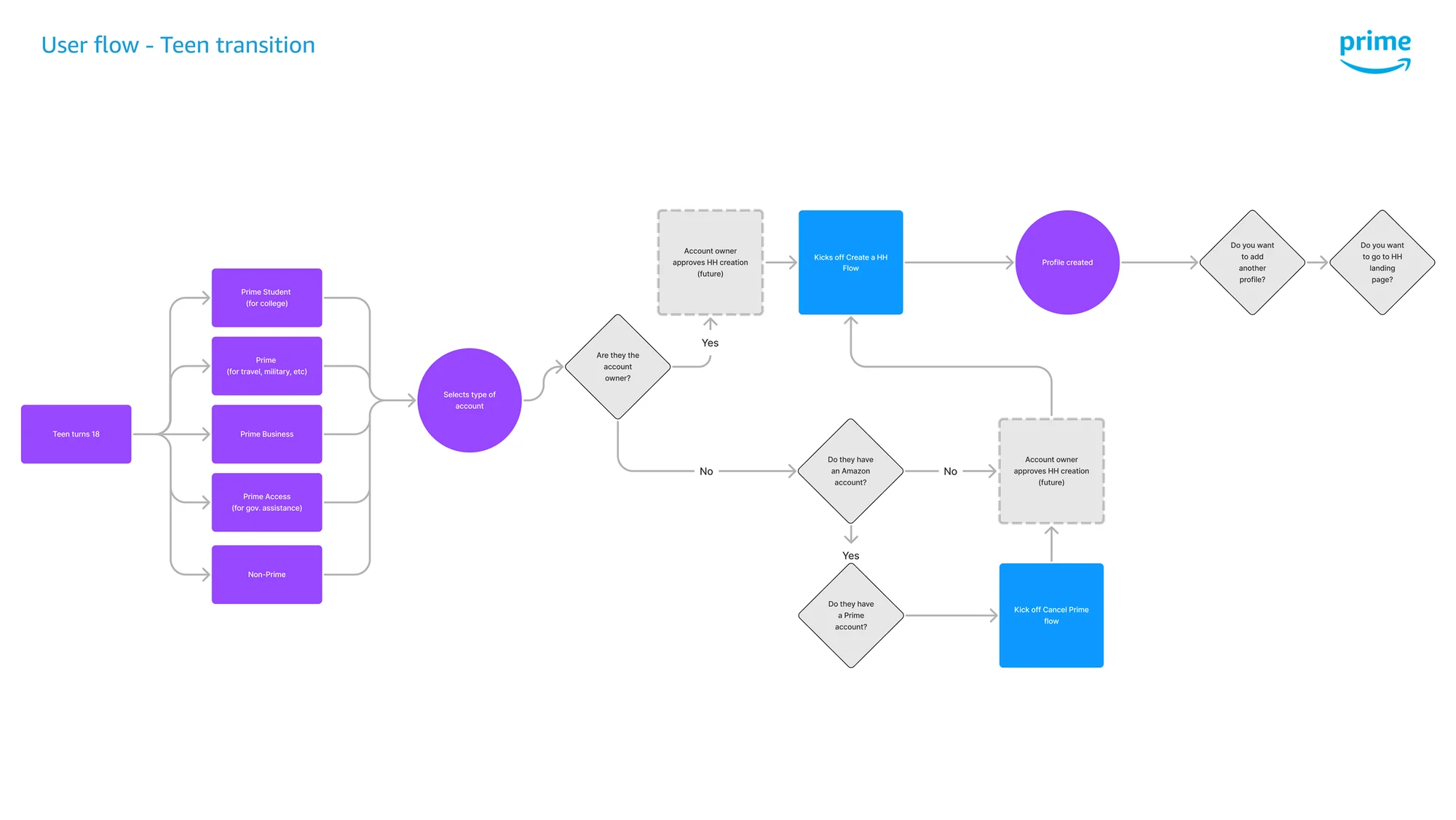
At 18, people go to college, join the military, start a business, take a sabbatical or get a job. I asked how Prime's offerings could meet teens where they are, and mapped the options in a flow diagram.
After aligning with my partners, I mapped a new journey that showed when to communicate proactively and where to offer choices.
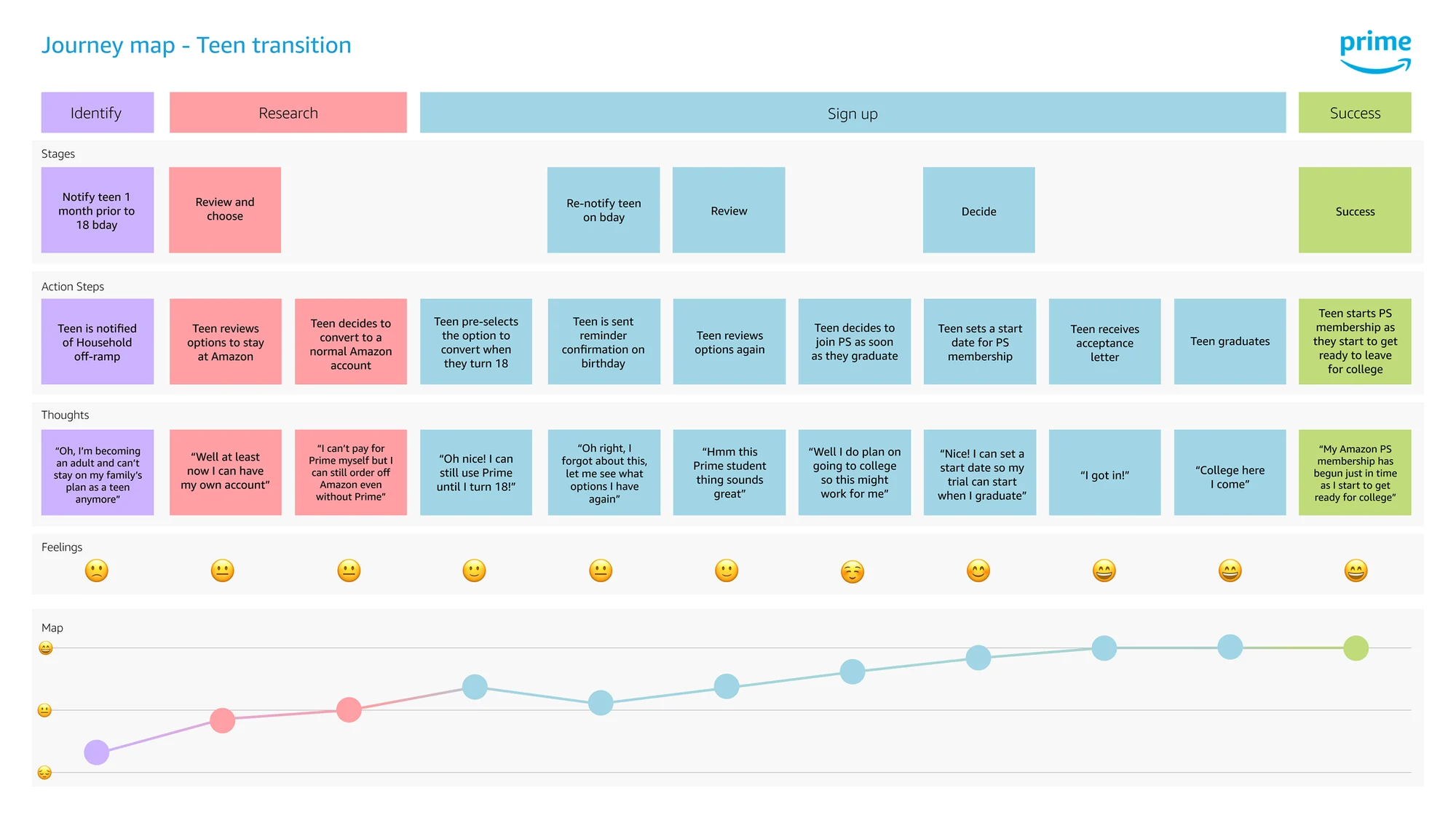
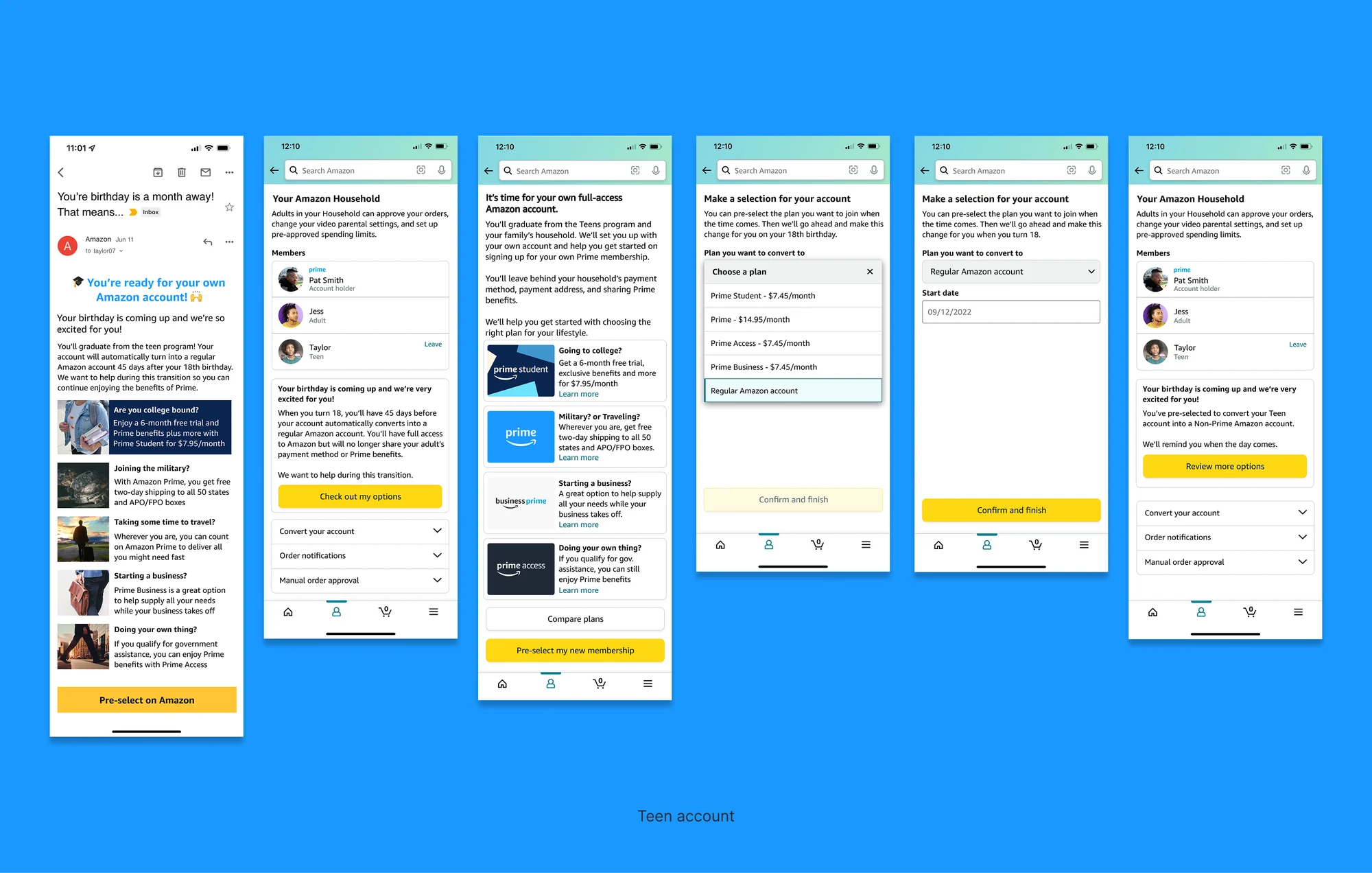
A month before a teen's 18th birthday, teens and parents got an email explaining the change as an exciting milestone. On the birthday, they got a final reminder, along with in-app notifications. I worked with UX writers on the tone and with engineers to fit the existing architecture.
Making it delightful
Teens could now pre-select what their account would become, from Prime's 4 membership options or a regular Amazon account.
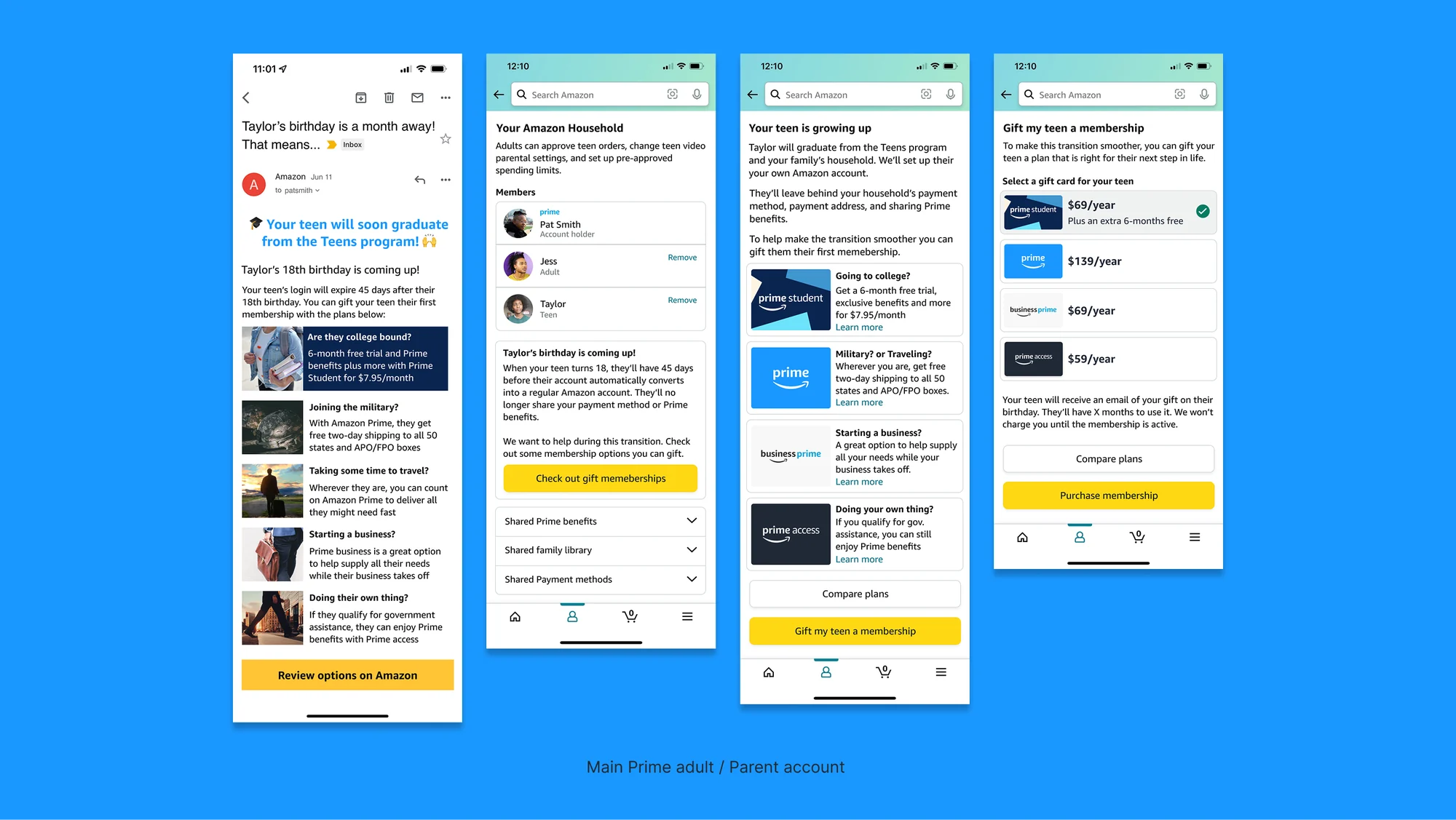
Parents could gift their teen a first year of Prime. And if a parent had an open adult slot, the teen could move into it without any disruption.
Validating assumptions
"I love the different options. I didn't plan on going to college so it's cool to see other options I can take that might fit my path."
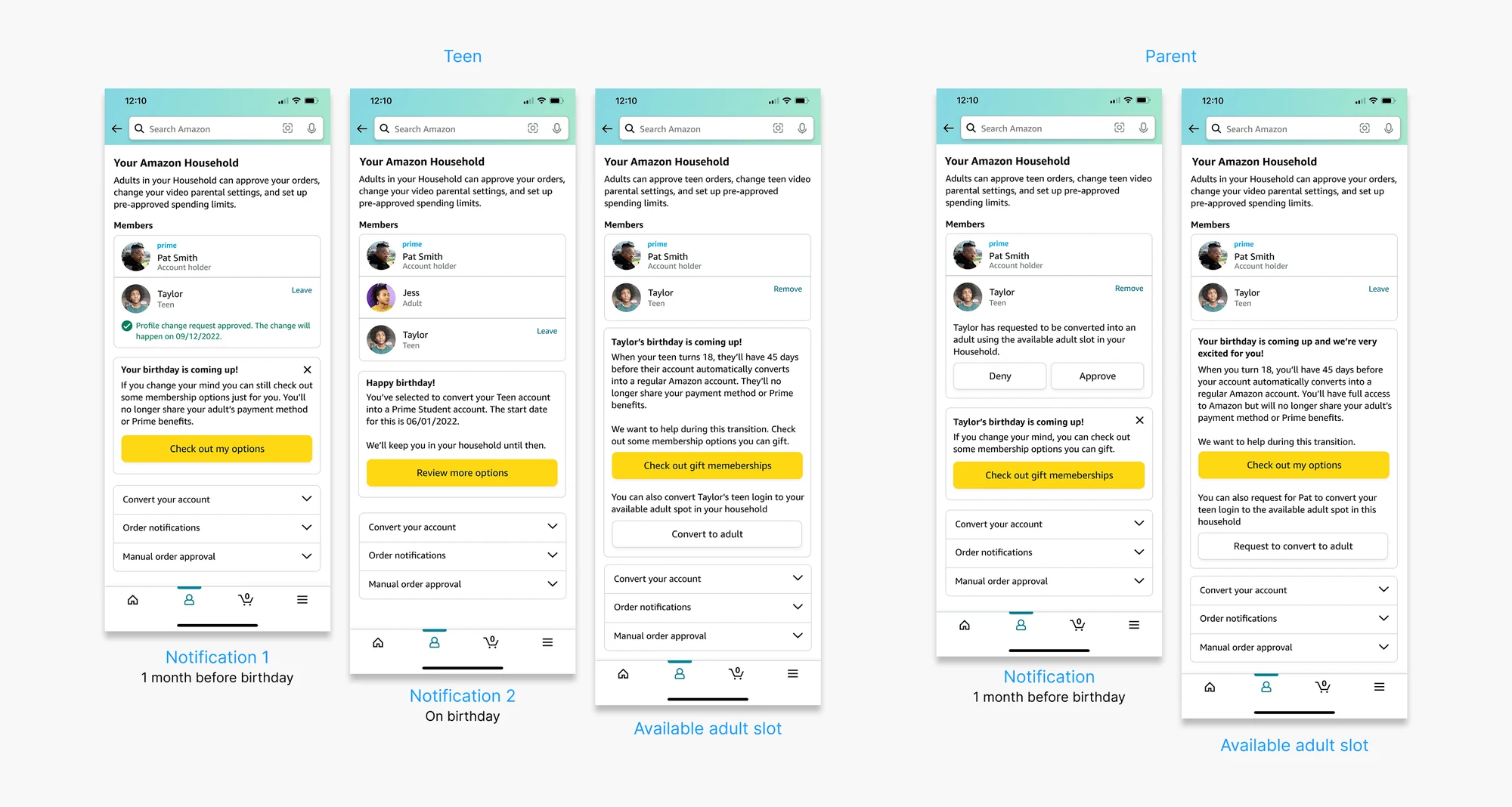
After reviews with product, leadership and legal, I made minor copy and visual adjustments, but the core flow stayed intact. Everything came together in one Household page where teens and parents could manage the transition and explore options.
The impact
Giving teens more control and parents more clarity made the transition intuitive and supportive.
Teens and parents could now manage the transition in one place, with emails and in-app messages that explained what was happening, when and what to do next.
What I learned
Teens felt empowered when they could choose, and parents responded to clear, proactive communication. Working closely with UX writers, engineers and the Profiles team kept the experience feasible and consistent across Household. These principles became a framework for other account lifecycle experiences across Prime.
Confidential information has been omitted or blurred to comply with my NDA. All material is property of Amazon.