Intelligent Agriculture
An AI platform that helps farmers optimize crops and reduce waste by monitoring soil, plant and air conditions.
- AI
- IoT
- Agriculture
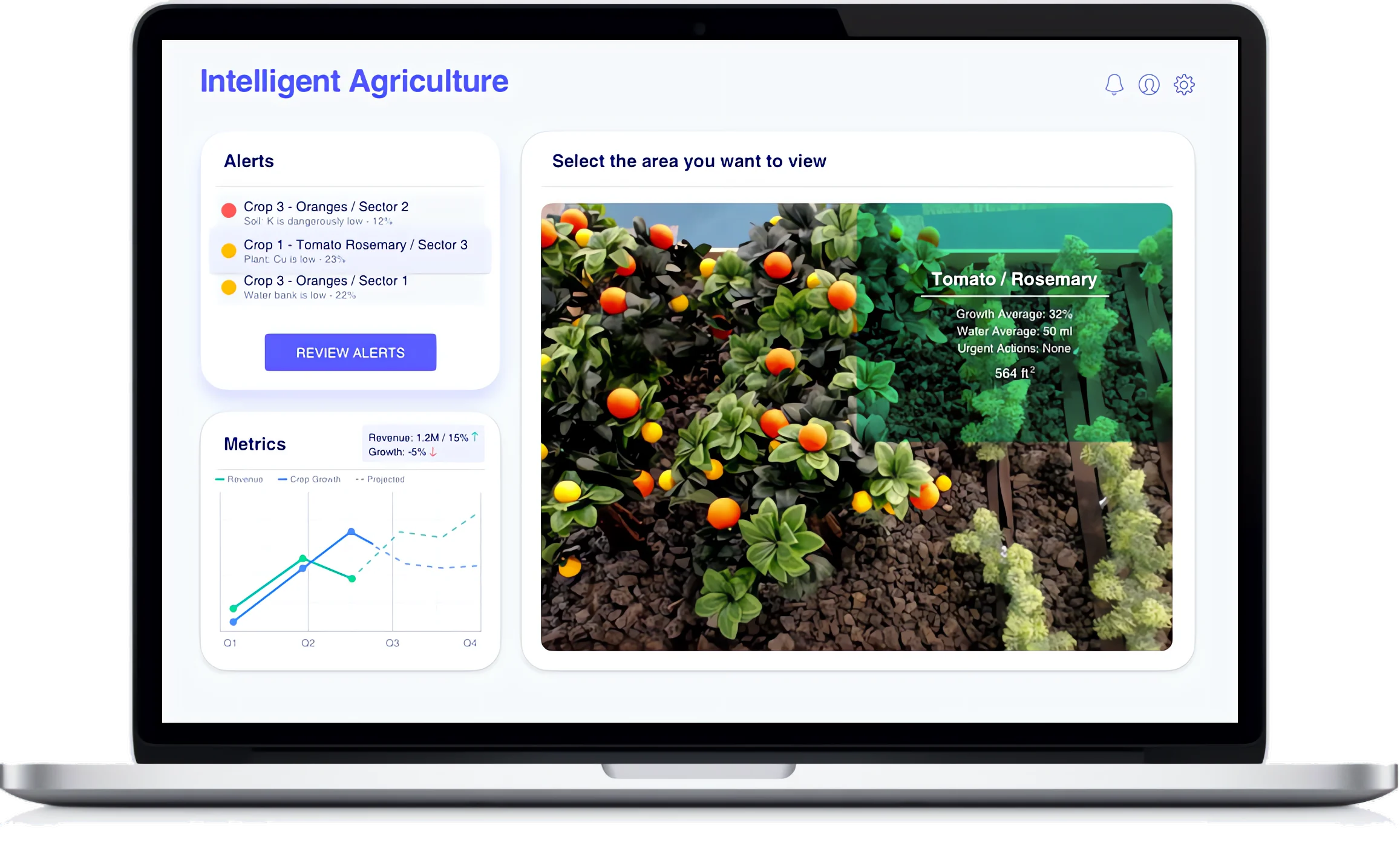
Farmers often fix crop problems by trial and error. Lab samples are expensive and slow, and soil variables rarely get considered.
I interviewed plant and soil experts, mapped the experience, picked IoT sensors for six variables and redesigned the platform.
- The updated experience, leveraging IoT and AI, is part of Accenture's Innovation portfolio
- Six crop variables tracked with IoT sensors
- Patented demo update
Getting up to speed
Our showroom had a patented demo that used drones and machine learning to identify key factors in crops. I was asked to lead the project, update the prototype with more recent technology and refresh the experience.
The platform is for farmers who want to optimize their crops and reduce waste, so the goal was less waste and more profit.
The right tools make a difference
I started by building a team. An AI architect helped me check viability and feasibility, and a UX researcher gave me another point of view during discovery. I interviewed two experts in plant care and soil nutrition, who walked me through the pain points farmers live with.
- 01There's a lack of knowledge around irrigation and air humidity
- 02Lab samples to find nutrient deficiencies are expensive and slow
- 03Soil variables usually aren't considered when balancing nutrients
- 04Problems are usually solved by trial and error
With these findings, the team and I mapped an experience diagram and pulled requirements for the new version. Then we looked for IoT sensors that could read water and soil pH, air and soil humidity, plant and ambient temperature, CO2 levels, and soil macro and micro nutrients.
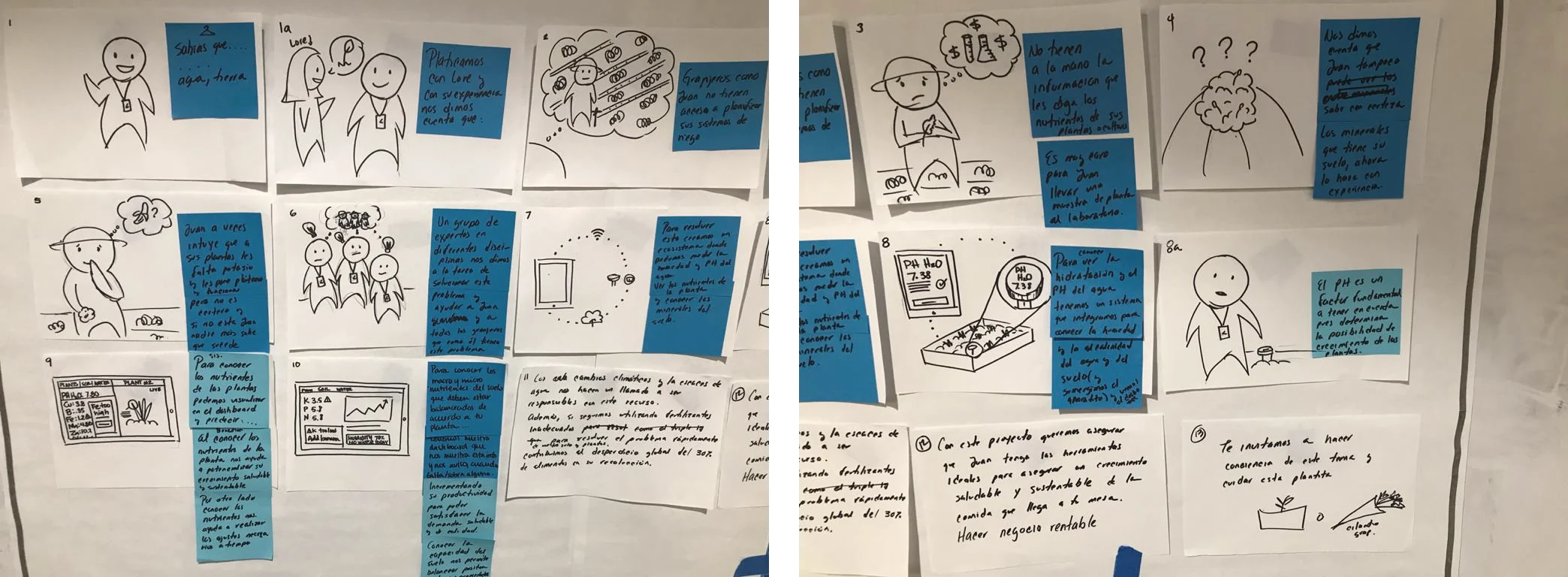
From storyboard to screens
With requirements and a feasible plan in place, I gathered the team to storyboard the updated version. That told me exactly which screens the story and user flow needed.
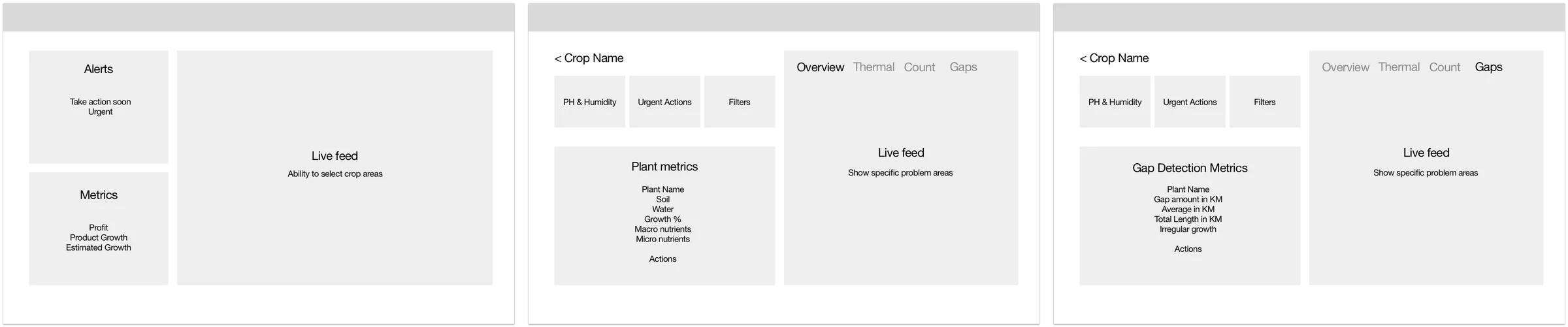
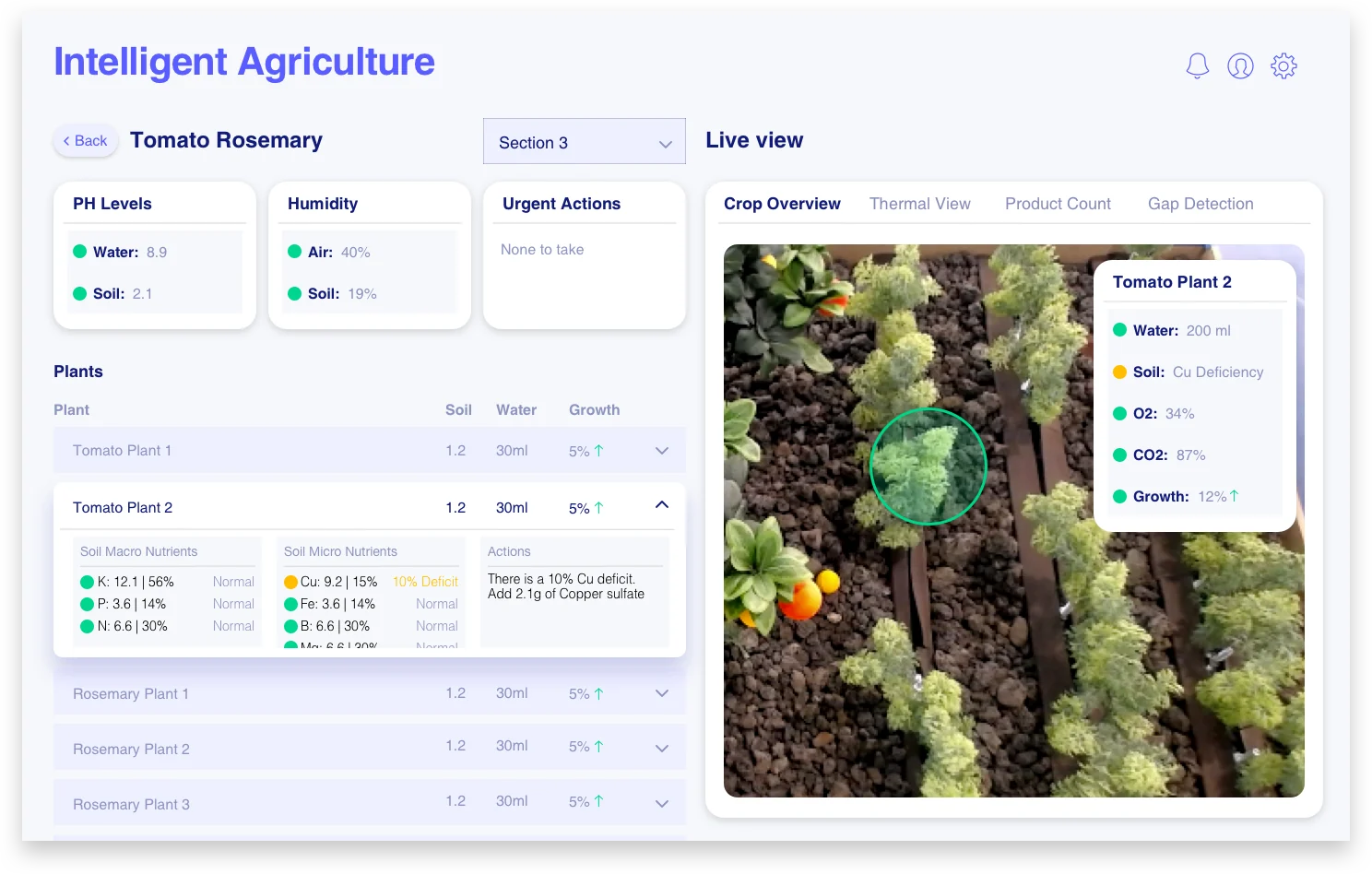
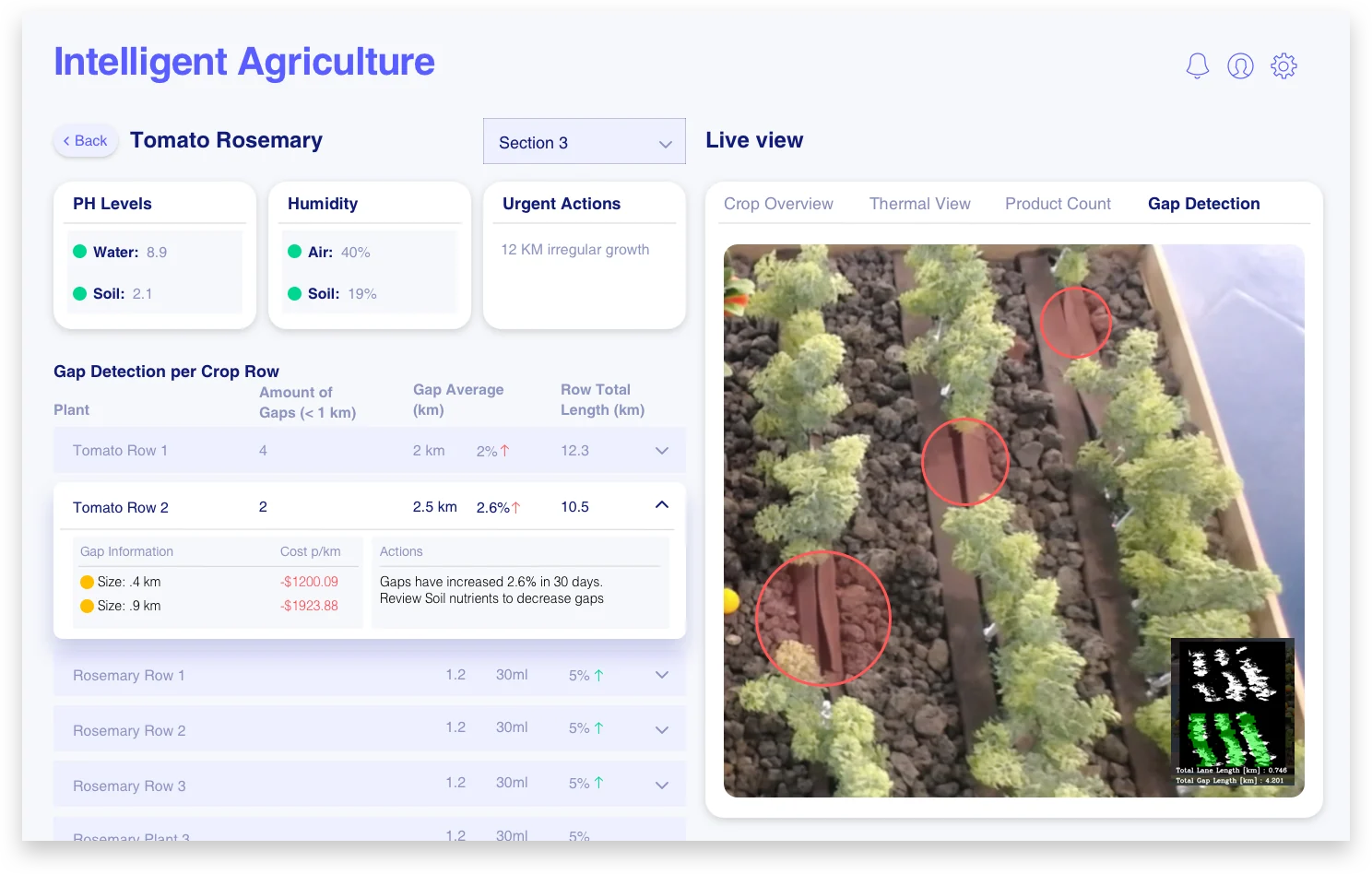
I worked through sketches and wireframes, reviewed them with the rest of the Innovation team, made some tweaks and designed the UI.
What happened
- The updated screens are part of Accenture's Innovation portfolio
- Six crop variables tracked with IoT sensors
The project paused during the pandemic, but the updated screens are still part of Accenture's Innovation portfolio.
Accenture stopped receiving client visits, so the demo went on hold with all the pieces ready to put together. Discovery was especially fun. I expanded my knowledge of IoT devices and learned how to make compost. I also found out that overwatering is probably what killed my plants.
Confidential information has been omitted or blurred to comply with my NDA. All material is property of Accenture.