Estately
I led the design vision for a new home-buying app, from laying UX foundations to an AI concept that shaped the product's future.
- AI vision
- Design leadership
- Consumer
The MVP was moving fast while goals, success metrics and tech alignment were still being defined, so designs were often revisited and reworked.
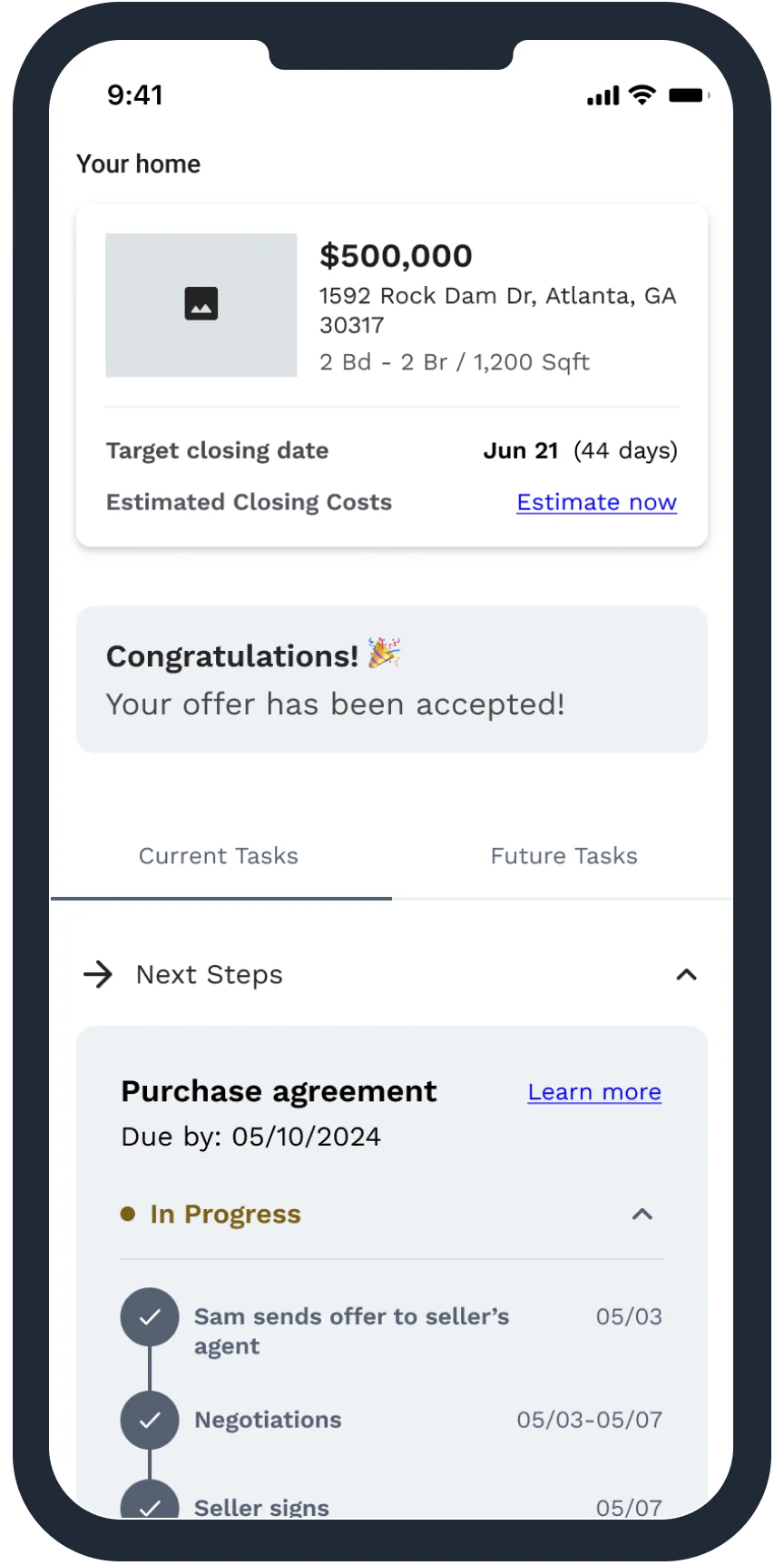
I brought structure to the MVP with end-to-end flows, templates and design reviews. Then I designed and tested a blue-sky AI concept for closing, the most confusing part of buying a home.
- Validated the AI concept with recent buyers, first-time buyers and active shoppers
- Earned executive buy-in and a funded team to build it
- Promoted to Design Manager, leading 4 teams
UX strategy and vision
When I joined, the team was already building an MVP focused on home search, and design work was organized around individual Jira tickets. Engineering was new to partnering closely with UX, which gave me a chance to bring more structure and alignment to how we worked. My role quickly evolved from contributor to design lead.
Later, I was asked to define the product's future direction to inform the company's strategic roadmap.
Foundations first
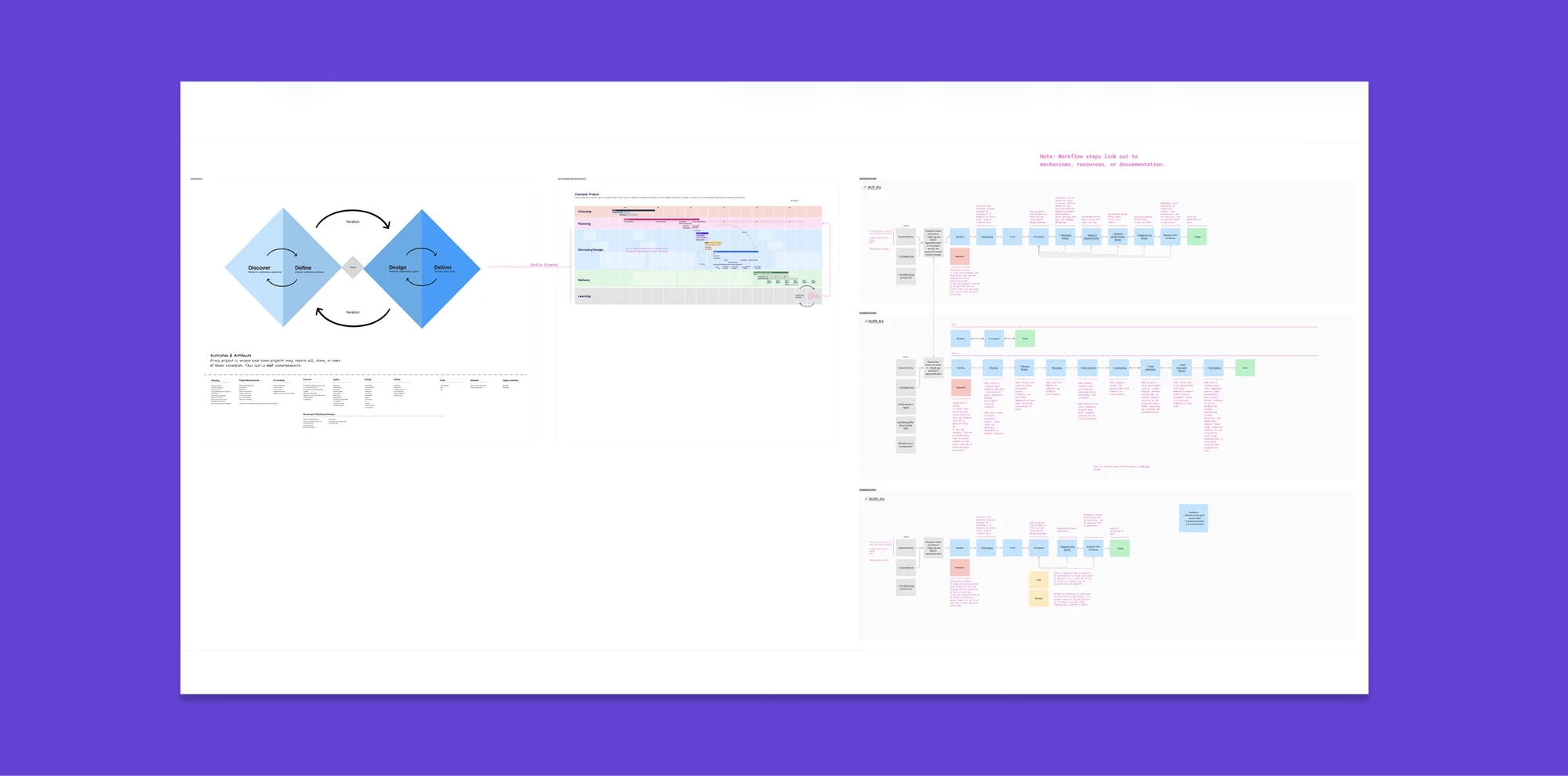
I reviewed the existing work and met one-on-one with my partners to learn what success looked like for them. Then I built a template to organize screens into end-to-end flows and use cases. These templates became part of the Anywhere UX team's process.
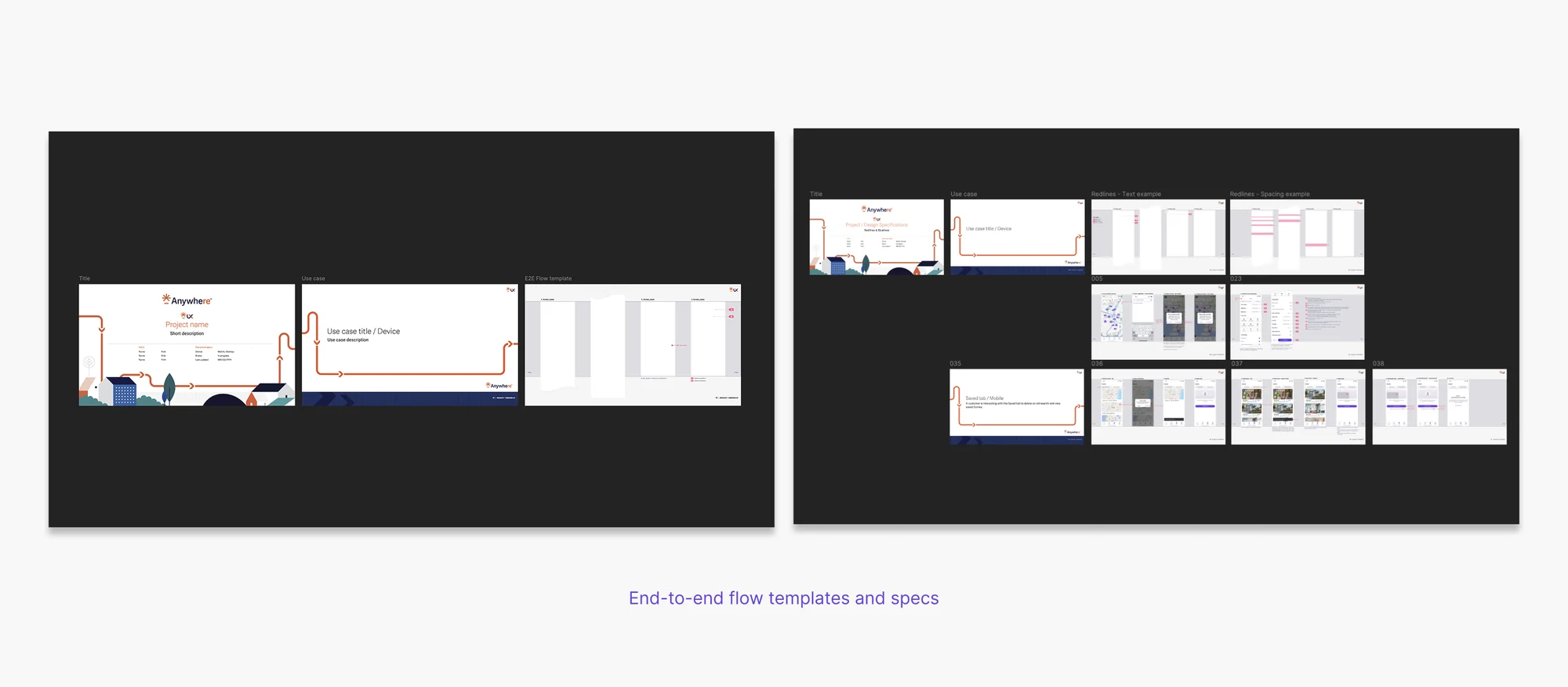
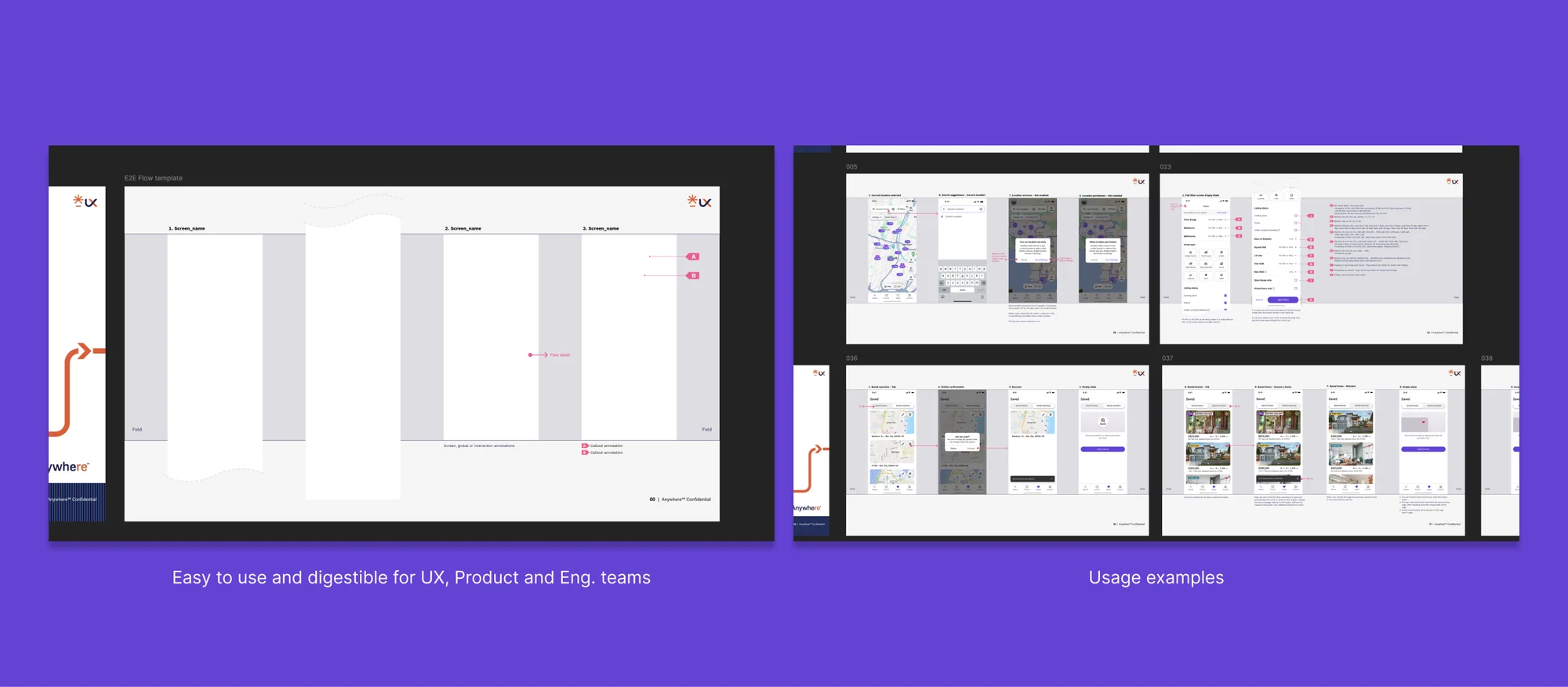
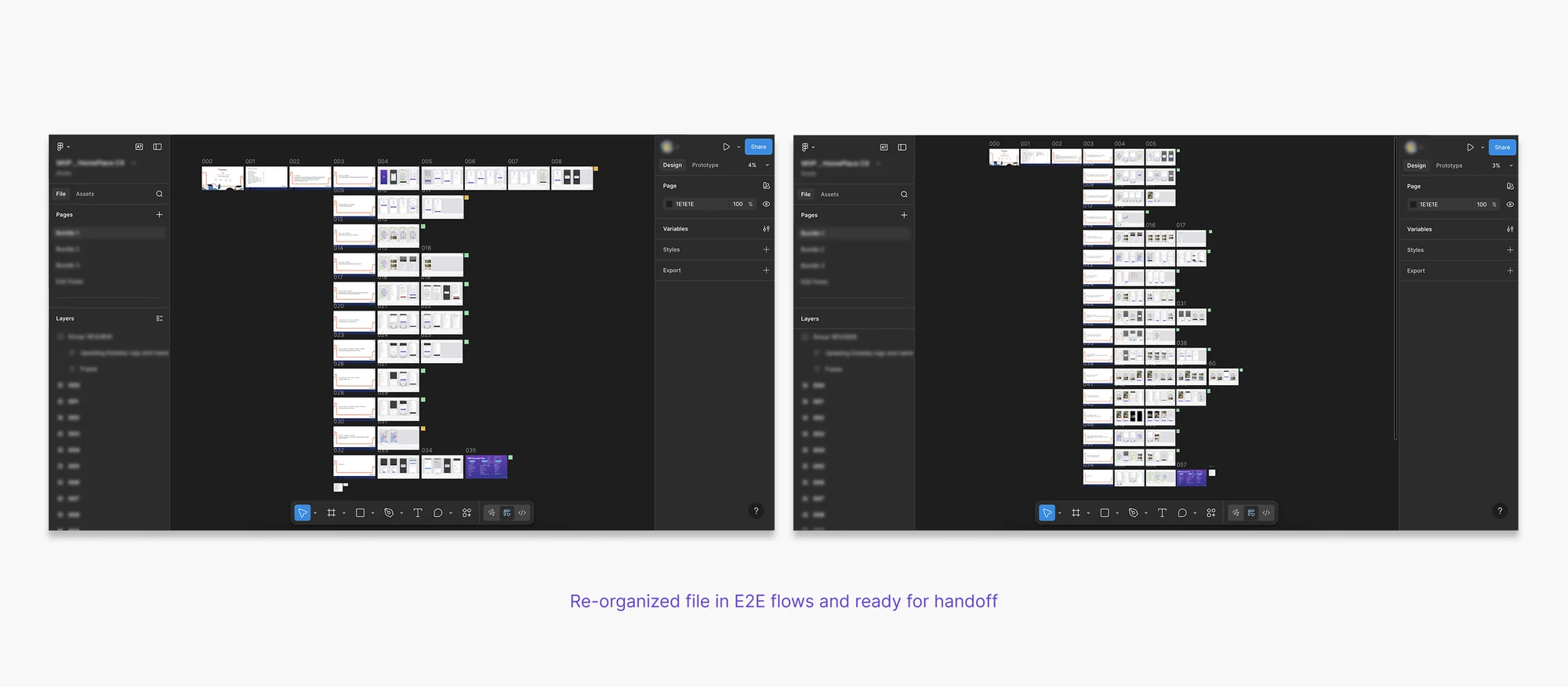
With annotated flows, grooming got faster, missing use cases surfaced and timelines became more accurate. I ran working sessions with product and engineering to map journeys together, and set up a cadence of design reviews.
Let's get user feedback
Once the day-to-day work was stable, I partnered with a UX researcher to validate features, content and overall use of the app. Results were mostly positive, and the feedback helped us improve the experience.
Start thinking ahead
The VP of UX asked me to think about the future and create a blue-sky concept we could test. Exploring the home-buying process, I realized closing is a black box. Buyers feel anxious, uninformed and afraid of missing something, and two years of past research said the same thing.
"You just hope you have a good agent that will keep you up-to-date on anything you need to do before closing."
I wanted to learn two things. Would buyers value visibility into closing, or prefer to rely on their agent? And would they trust us if we used AI and ML to help? With our UX researcher and another designer, I built a low-fidelity, mobile-first prototype of the closing process.
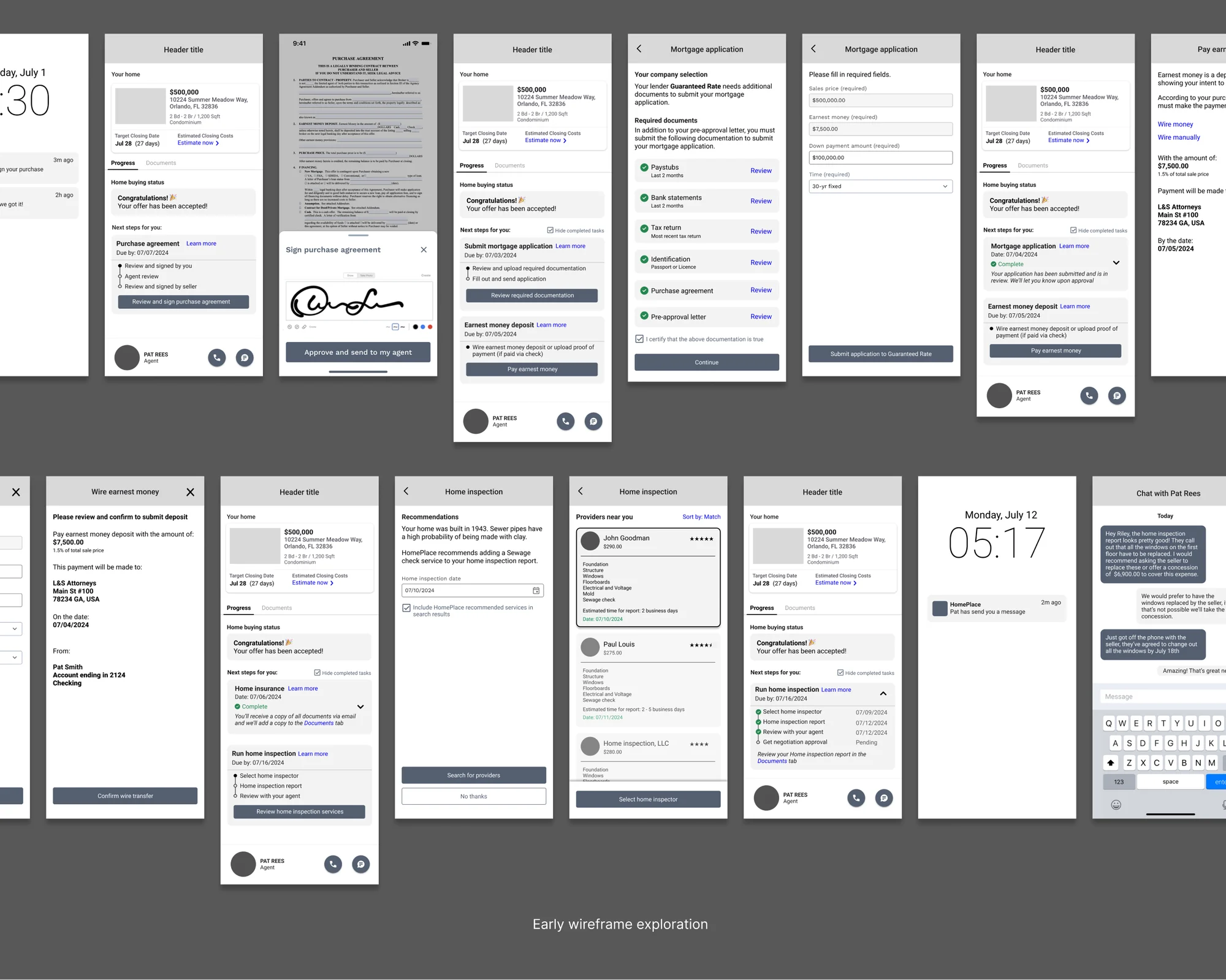
Every step was grounded in real estate workflows, like signing purchase agreements, paying earnest money, tracking deadlines and staying in touch with your agent. I also added AI touchpoints with insights about the home being purchased.
I've worked with AI and ML since 2018, and here I was intentional about using it to help buyers feel confident and informed. For example, flagging homes in seismic zones that might need foundation checks, or MLS and public data worth paying attention to.
Blue-sky to north star
We tested the prototype with 13 participants: recent buyers, first-time buyers and active shoppers. They expressed relief and excitement at finally having visibility into closing.
"Wow, I wish this would've existed last year when my wife and I bought our house."
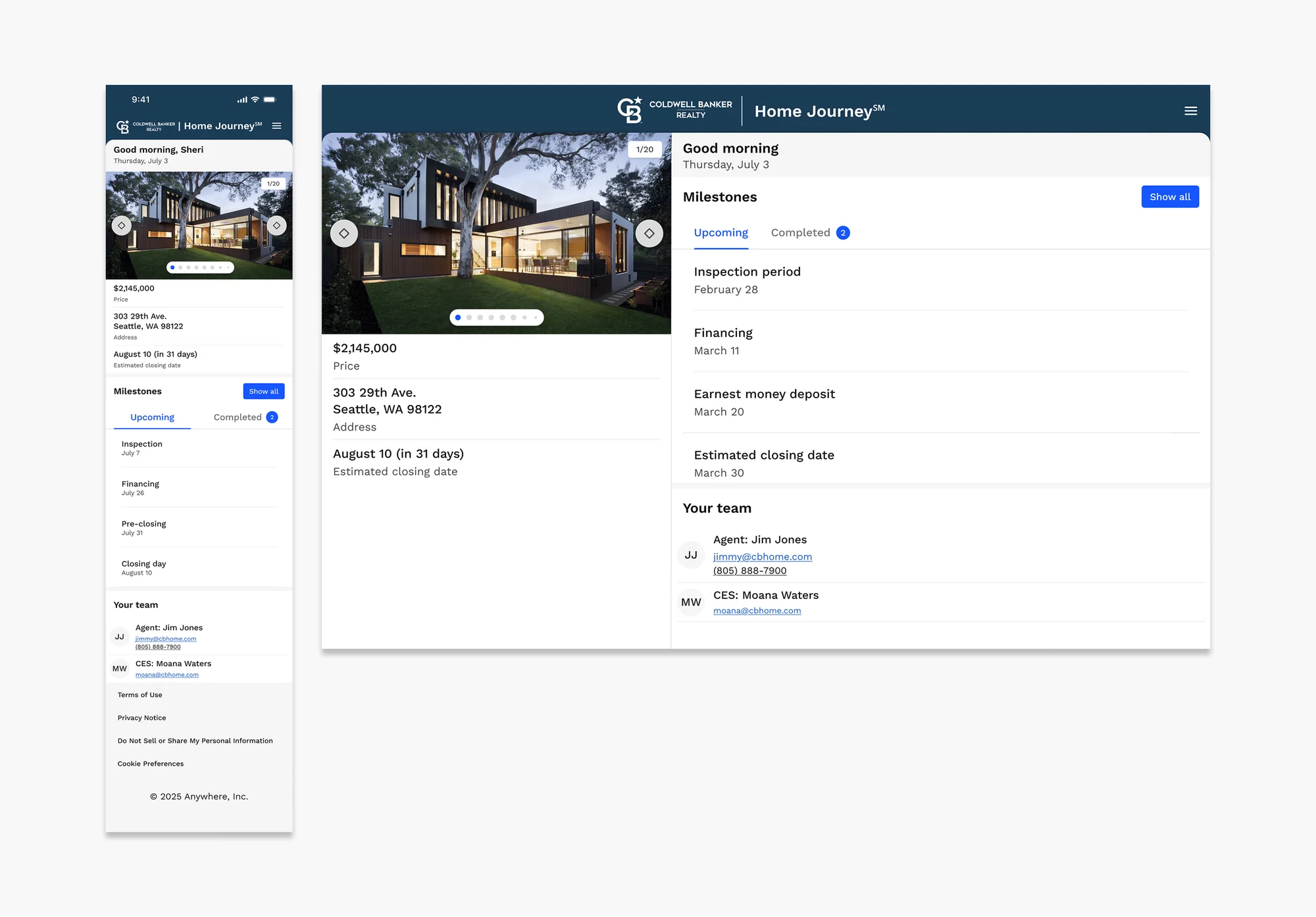
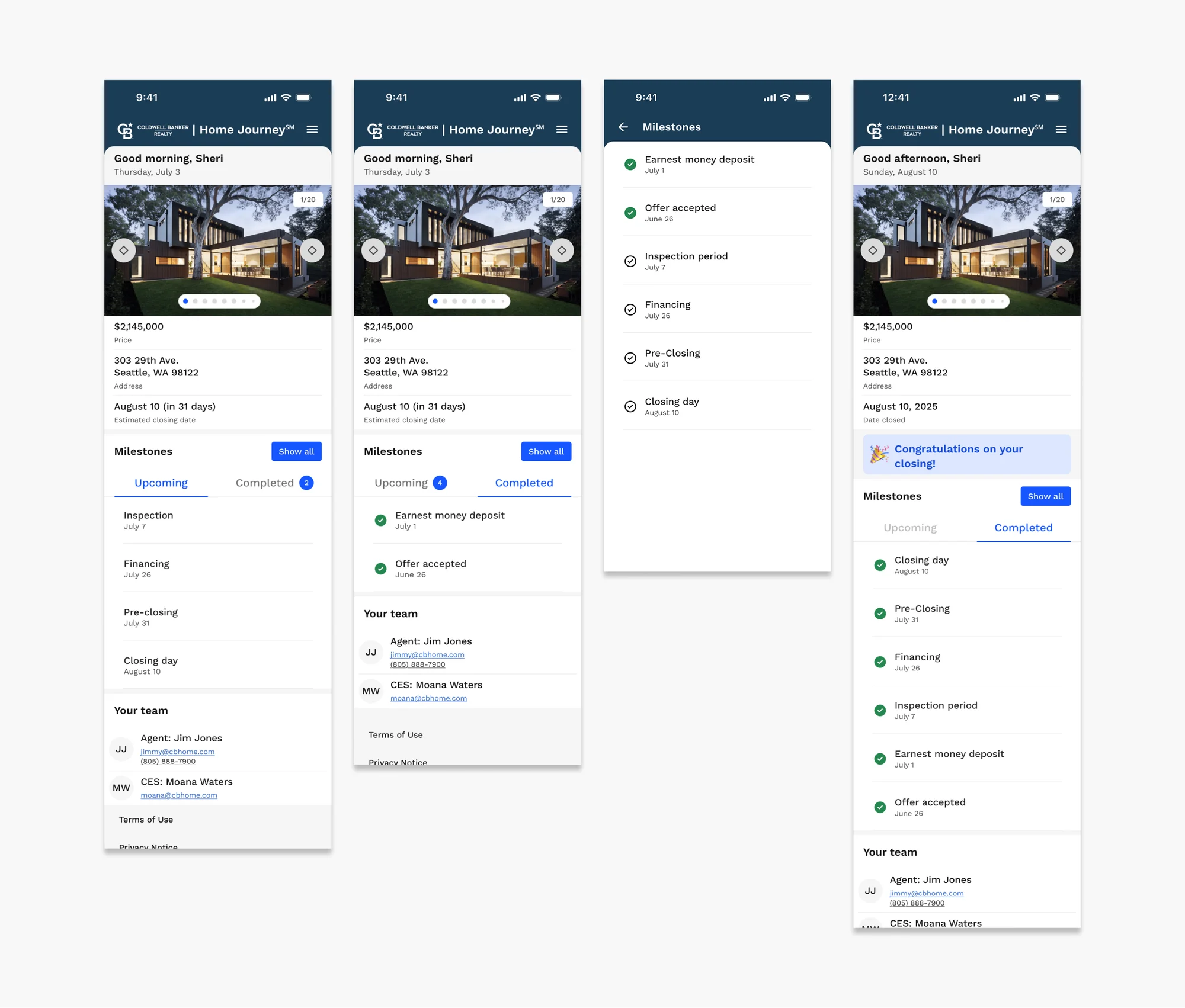
The research validated the strategic direction and secured executive buy-in. Anywhere approved the initiative and formed a dedicated team to build it. I led that team, and a designer I managed created the initial mocks that launched in mid-2025.
The impact
- Validated the AI concept with recent buyers, first-time buyers and active shoppers
- Earned executive buy-in and a funded team to build it
- Promoted to Design Manager, leading 4 teams
The blue-sky concept made its way to the executive team and shaped the company's future roadmap.
Clear documentation helped engineering move faster and cut down on rework. Product partners started thinking in full user flows and the needs behind them. The templates and workflows I introduced became part of the formal UX process, which helped our designers grow and strengthened trust in UX as a strategic partner.
What I learned
I was promoted to Design Manager, leading three consumer product teams and the design initiatives team. One of those teams is bringing this vision to market, a full-circle moment that started with a simple blue-sky prototype.
Looking back, this project was about more than the screens we designed. It was about creating clarity, building UX maturity and shaping a vision centered on real customer needs.
Confidential information has been omitted or blurred to comply with my NDA. All material is property of Compass Intl. Holdings.